
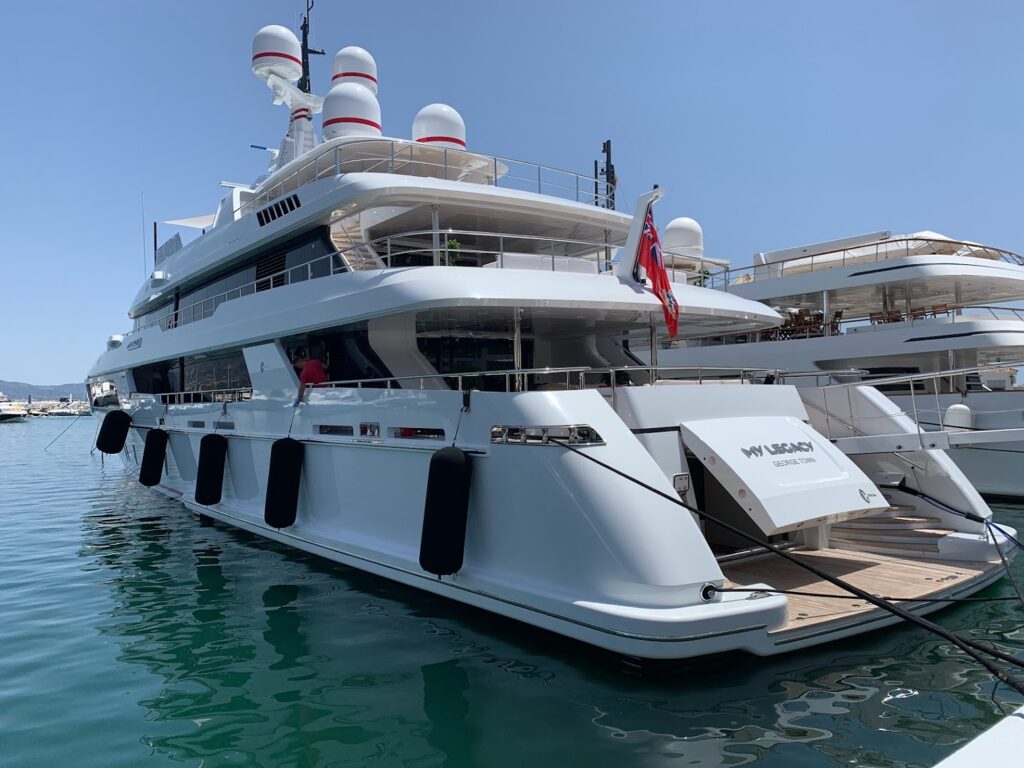
The rapid growth of the superyacht industry shows no signs of slowing. Recent reports have stated there are now more than 6,000 superyachts – designated as luxury vessels exceeding 30 meters in length – in the world today, and it’s a number that is set to increase over the next few years. With yachting more popular than ever before, there’s a significant demand for superyacht crew at sailing hubs, marinas and agencies across the globe, as talented staff members are essential for the effective, safe and efficient execution of each and every seaborne endeavor.
However, problems abound in the world of superyacht crew employment. There’s the much-discussed staffing crisis in the yacht sector – driven by large numbers of crew leaving the industry and citing poor treatment, inadequate work-life balance and a lack of attention given to mental health awareness – and an enduring perception that superyacht crew positions lack opportunities in career progression.
Are there options for superyacht crew looking to move forwards in their career, or does working on superyachts really come with limited opportunities for progression (and if so, what is being done to tackle this blocker in the sector)? Today, we’re taking a closer look at this claim, and examining where stability and advancement can be found within a sector experiencing an unprecedented boom.
Understanding negative preconceptions of crew careers
It’s not hard to get a handle on why there’s so much negativity surrounding career progression in the yachting sector – especially in recent years, when so much has been discussed about the employment crisis within the industry.
Much of the news surrounding superyacht crews has focused on the shockingly high staff turnover within the scene; something that has been repeatedly compounded by demanding work conditions that often lead to burnout, and the intensity involved in the day-to-day tasks central to working on luxury vessels. Thankfully, it seems as though this tide is turning: more and more superyacht crew employers are awakening to the need for positive change, as well as the necessity for investing in talent development and staff retention.

However, negative preconceptions are hard to erase completely. In order to attract and retain new crew members, considerable work must be done to demonstrate structured career paths. For too long, employers have done little to demonstrate that superyacht crew roles can be so much more than a temporary job, and can be rewarding long-term careers with plenty of opportunity for growth and development.
Opportunities for forward motion
For those willing to put the time, effort and perseverance into their careers – and those fortunate enough to work for vessels, agencies or other yachting employers embracing a positive approach to crew retention – superyacht crew have plenty of opportunity for progression.
Indeed, there are significant opportunities for growth within the realm of superyacht crew careers, and it’s far from unheard of for those who start in deckhand or other supporting roles to move into managerial positions including chief steward or lead deckhand, to name but two. By focusing on acquiring new skills, anticipating incoming trends in the yachting industry and maintaining a strong work ethic, crew members can not only become indispensable to employers, but also garner a more stable and attractive industry.
Perhaps the most pertinent way of achieving longevity within the yachting industry is to acquire certifications that allow for a broader range of employment opportunities. While all yacht crew need to obtain mandatory qualifications (most notably the Standards of Training, Certification and Watchkeeping for Seafarers or STCW, and the ENG1 Seafarers Medical Certificate), there is a plethora of other certificates that can be acquired to help aspiring crew stand out in an increasingly selective job market. Qualifications such as the MCA Proficiency in Designated Security Duties (the PDSD), radio licenses and food hygiene certifications are increasingly recommended, and role-specific training – such as RYA Powerboard certification – enable crew to obtain more attractive roles, while demonstrating a willingness to invest in one’s own progression.
For interior crew, career longevity often arises from specialization: there are several advanced training opportunities in increasingly-desirable skills that appeal to higher-end employers, and which can help cement one’s reputation for excellence within the industry. There has been a noted increase in demand for skilled baristas, sommeliers, florists and even olive oil experts in recent years; all skill-based certifications that can be acquired by those looking to turn passions and enthusiasms into genuinely employable talents for a career at sea.
Acquiring and applying transferable skills
Working within the superyacht industry may not be a long-term career for everybody, yet this does not mean it should be seen as a career in which limitations outweigh the opportunities it allows. In fact, a huge number of the skills, attitudes and certifications required for even entry-level positions in superyachting are highly transferable, meaning superyacht crew often find roles on board vessels to be excellent springboards for other jobs outside the industry.
This is especially true for those looking to transfer skills acquired in positions like chief steward or purser (among many others), which require a wealth of administrative talent and acumen that’s highly sought-after in other roles and industries. Working on a superyacht, perhaps more so than in most workplaces, calls for a level of dedication, attention to detail and self-motivation that forges a powerful work ethic and results in impressive resumes; and many individuals who cut their teeth in yachting have gone on to apply these attributes elsewhere, and with great success.
The yachting industry, especially at present, is one which is far from perfect. It’s an industry undergoing significant changes, and one which has demonstrated a need to apply fundamentals learnings gleaned from rapid expansion and an internal employment crisis. However, it would be a mistake to see careers within the realm of superyachting as limited – especially in a time of unprecedented growth, which will – we hope – lead to unprecedented opportunity for those willing to help create necessary positive change.