
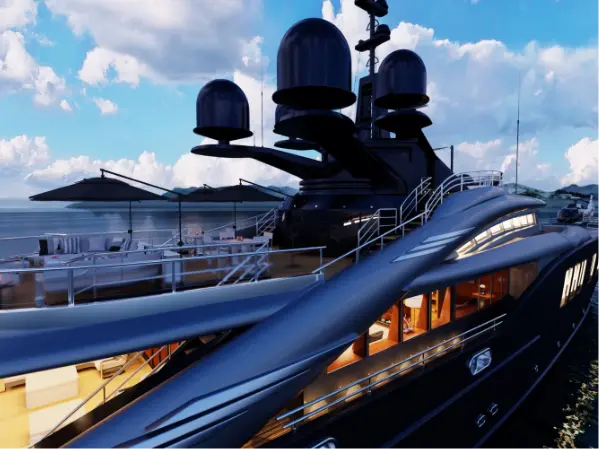
According to the latest SYBAss outlook, at the time of their earlier assessment, the superyacht sector was projected to achieve approximately 80–100 yacht launches per year through to the end 2026, assuming the prevailing industry trend continued. Yacht production is now at one of its highest points in modern history. The market is expanding, expectations are evolving, and demand for exceptional crew is rising faster than ever before.
What if I told you that the future of luxury has nothing to do with yachts, or design, or even technology – but everything to do with people?
What if the next real revolution in yachting isn’t measured in steel or carbon fiber; speed or sustainability – but in something far more fragile, far more powerful – the human soul?
Let us step back for a moment and ask ourselves: What does excellence really mean when everything works – but nothing moves us?
The next great innovation in our industry won’t be measured in meters, horsepower, or materials – but in empathy, intuition, and connection. Because luxury, at its core, is not a product. It is a feeling.
That feeling – the magic that makes someone feel seen, understood, and valued – is created by human beings. No artificial intelligence, no algorithm, no specification sheet can replicate the warmth of genuine human care. And yet, the very soul of service – the human element – is at risk of being diluted in our pursuit of perfection, efficiency, and scale.
The yachting world is, in many ways, the most intimate expression of luxury.
It’s personal, private, and deeply emotional.
Yet – and this is where the paradox begins – it’s also highly technical, operational, and complex.
All crew (some to a lesser degree than others) are trained in and are responsible for safety procedures onboard as it’s a paramount concern.
Among a myriad of responsibilities,
- Captains manage onboard logistics and compliance, navigation, crew and financial management.
- Engineers ensure operational safety, maintenance and conformance of all onboard systems.
- The interior team maintains the yacht’s luxurious interiors and delivers technical excellence in service.
But somewhere between efficiency and elegance… the soul of service can get lost.
Guests may experience perfection – but not necessarily connection.
The truth is:
You can buy a beautiful yacht.
You can design an extraordinary itinerary.
You can invest in exquisite artwork, luxurious soft furnishings and the finest champagne,
But what you cannot buy is the authentic feeling of being genuinely cared for.
That’s the human element – the invisible layer that turns a perfect journey into an unforgettable one.
And that human element – is under pressure today.
Crew turnover is high.
Expectations are rising.
Boundaries between guests and crew can become blurred.
And owners are becoming more diverse – culturally, generationally, emotionally.
So, the question we must ask ourselves is:
How do we elevate the human side of yachting – not just the hardware.
Because yachting, at its heart, is not about vessels.
It’s about vessels of emotion.
The finest yachts may be built of steel, aluminum or carbon fiber, but the real craftsmanship lies beyond materials –
It lies in creating emotion
In designing experiences that move people
Experiences that make them feel something rare, and real
That is the soul of service – the human element that transforms an interaction into a memory, and a transaction into a relationship.
The Reality Behind the Perfection
Let’s begin with the challenges – because they are real and pressing.
First: Fragmented training and standards
Unlike luxury hospitality or retail – where service philosophy is ingrained from induction to leadership –
in yachting, training is often technical, not emotional.
We teach what to do, but not how to make someone feel.
Second: A generational shift in expectations
The new generation of yacht owners and charter guests are not just younger –
they are more curious, more value-driven, more connected to experience than status.
They crave authenticity, not performance.
They want service that feels intuitive, not rehearsed.
Third: Crew wellbeing and retention
A crew that doesn’t feel valued will never deliver value.
Fatigue, lack of recognition, and emotional exhaustion erode the very essence of service.
Perfection without purpose becomes pressure.
Fourth: Operational silos
Too often, deck, engineering, and interior teams function as separate islands.
But luxury doesn’t happen in silos—it happens in harmony.
It’s the collective emotion that the guest takes home.
There’s nothing wrong with perfection.
But when perfection becomes the goal, connection becomes the casualty.
We see this across many industries – not just in yachting:
Service that is correct, yet cold.
Teams that are skilled, yet emotionally depleted.
Leadership that manages, but rarely inspires.
Today’s Superyacht crew face immense emotional and operational demands.
They’re expected to deliver excellence endlessly – with little room for pause.
And when the people who serve become fatigued, unseen, or undervalued,
the experience inevitably loses its warmth.
At the same time, a new generation of owners seeks something different – less about status, more about substance and purpose.
They crave meaning.
They crave connection.
And that is where our greatest challenge becomes our greatest opportunity.
The Reality of Yacht Crew Life (which is far from what is seen on “Below Decks”!)
The false portrayal of the realities of professional superyacht crew has become a real bugbear with many of us in the industry, as a) it has and will continue to attract the wrong caliber of individuals into the industry, and b) it gives a false impression of the professionalism required to become a Superyacht crew member. This misrepresentation is particularly important because it skews public perception of what the role truly demands and can undermine efforts to attract and retain top-tier talent.
Behind every flawless service lies a reality rarely seen.
Life onboard a yacht is extraordinary – but also extraordinarily demanding.
Crew live where they work.
They wake before dawn, long before the first espresso is served,
and end their day long after the last glass of champagne has been poured.
They deliver perfection in confined spaces, under constant observation,
with no real pause – physically, emotionally, or mentally.
Privacy is a luxury they do not have.
Personal space is measured in square meters.
It’s a symphony of coordination – but also a test of patience, resilience, and emotional control.
At sea, there is no “off switch.” No commute home.
No separation between work and rest.
Even leisure feels borrowed – moments of calm squeezed between service calls or watch shifts.
And yet, despite this relentless rhythm, the best crews radiate grace.
They smile. They anticipate. They connect – often masking exhaustion with elegance…. and too often with alcohol and drugs
Because they know that in this world, luxury is not about things – it’s about feelings.
But that responsibility comes at a cost.
Without rest, recognition, and emotional support, even the most passionate crew can lose their spark.
If we truly wish to protect the soul of service,
we must begin by protecting the souls of those who serve.
The Risk of Neglecting Crew Wellbeing
If we fail to care for the very people who bring yachts to life, we risk far more than fatigue or turnover.
We risk eroding the essence of luxury itself.
Because when crew are exhausted, unmotivated, or emotionally disconnected, even the most exquisite yacht loses its heartbeat.
Guests may still see perfection – but they will no longer feel it.
And when feeling disappears, so does the magic that defines our world.
The result?
A silent erosion of standards, of loyalty, of pride – the invisible elements that make yachting extraordinary.
Neglecting crew wellbeing is not only a human risk – it is a reputational and industry risk.
A risk that echoes far beyond one vessel.
It impacts recruitment, retention, owner satisfaction, and ultimately, the image of yachting as the pinnacle of service and sophistication.
If we lose our people, we lose our purpose.
And if we lose our purpose, we risk becoming an industry of merely hardware, without soul.
The Industry Backdrop – A Growing Pressure
According to the latest SYBAss outlook, the superyacht sector is on an unprecedented trajectory. Yacht production has reached one of the highest points in modern history, and the number of vessels over 40 meters slated for delivery keeps climbing – a clear signal of expanding global wealth and shifting lifestyle priorities. But with this surge comes a strain: a growing demand for qualified crew.
Shipyards are building faster than the industry can train, nurture, and retain human talent.
So, while the hardware evolves at record pace –
the human infrastructure risks falling behind.
That imbalance – between innovation and emotion –
between performance and people –
is the very tension we must now address.
Learning from Other Worlds of Luxury
Let’s look beyond (and NOT below) our decks for inspiration – to industries that have turned service into a refined human art: luxury hospitality and high-end retail.
These sectors know something fundamental:
True luxury is not what you deliver – it’s how you make someone feel while delivering it.
Luxury brands invest purposefully and heavily in training their teams because service is as important as the product itself. Every employee is a touchpoint of the brand, and excellence must be consistent across all locations and interactions. Training goes beyond product knowledge – it develops soft skills, emotional intelligence, cultural sensitivity, and the ability to anticipate and personalize every customer’s experience. This investment not only ensures brand consistency and loyalty but also motivates and retains top talent, creating a team that embodies the values of the brand. In the world of luxury, training isn’t a cost – it’s an essential part of the brand itself.
These lessons are directly applicable to yachting. Imagine if yacht crew training focused equally on emotional intelligence – understanding personalities, anticipating preferences, managing energy onboard. That’s not a soft skill – it’s a strategic skill.
- Emotional Intelligence as a Skill
In the world of Bulgari(s) or The Ritz-Carlton(s), service begins with empathy. Staff are trained not just to see, but to sense. To read the room. To feel the rhythm of a guest’s mood -and adjust accordingly. - Anticipation, Not Reaction
Luxury retail brands like Louis Vuitton excel because they remember. They don’t ask, they already know. They remember your story, your preferences, your milestones -ensuring every visit feels intuitive, personal, and meaningful.
- Storytelling and Purpose
Every great luxury brand tells a story – of heritage, craftsmanship, identity.
Each yacht, too, carries its own story – a name, a vision, a voyage.
When the crew embodies that story, service transforms from task to theatre – from performance to philosophy. - Empowerment and Ownership
At great brands, employees are trusted.
Empowered to act, to surprise, to create moments without asking for permission.
When a stewardess feels free to delight,
when a deckhand feels proud to suggest,
when every team member feels seen –
they no longer serve – they represent.
And guests feel the difference instantly.
Because luxury begins where hierarchy softens….. and humanity leads.
Redefining the Future – The Human Standard
So how do we bring all of this together?
How do we ensure that, as an industry, we elevate the human element at the same pace as our technological innovation?
- Define a Human-Centered Service Standard
Let’s go beyond technical excellence.
Let’s create a standard that celebrates empathy, curiosity, and emotional craftsmanship.
Not manuals – mindsets. - Invest in Soft-Skill Training
Every yacht should invest as much in service psychology as in engineering precision.
Imagine training that includes listening, storytelling, body language, cultural awareness, and stress management.
Because the finest service begins not with instruction – but with intention. - Crew Wellbeing as a Strategic Priority
A joyful crew delivers joyful service — period.
The next generation of yacht leaders must weave leadership skills, wellbeing, recognition, and growth into the management fabric.
Mental health is not a weakness of the industry; it’s the wellness of it. - Building a Reliable Talent Pipeline for Yachting
To secure the future of our industry, we must build a talent pipeline that is intentional, structured, and inspiring. It begins with awareness – showing young people that yachting is a global, dynamic, and rewarding profession, not an accidental career.
We need clear entry pathways: accessible training, recognized standards, and onboarding programs that prepare crew not just for the technical tasks, but for the emotional and cultural complexity of delivering world-class service.
Next comes continuous development. Talent stays when people feel they are growing. Mentorship, leadership programs, mental well-being support, and opportunities for advancement turn jobs into careers.
Finally, we must elevate the industry’s image by celebrating professionalism, recognizing excellence, and showcasing role models who reflect the diversity and ambition of the next generation.
A reliable pipeline isn’t found – it’s built. And when we invest in people with the same precision and pride that we invest in our yachts, we create a future where excellence is not a challenge, but a certainty.
- Cross-Industry Collaboration
Invite hospitality and retail leaders to train yacht crews.
Let’s create exchange programs where emotional intelligence becomes as valued as seamanship.
Service excellence is a universal language- let’s speak it together. - Technology as an Enabler, Not a Replacement
Yes, AI and apps can streamline operations –
but they should never replace the warmth of a smile or the intuition of human presence.
The future of luxury is high-tech and high-touch.
Closing Reflection – The Soul of Service
In the end, yachts are not remembered for their length, speed, or price. They are remembered for how they made someone feel.
Luxury, in its purest form, is not perfection. It is emotion. It is connection. It is care – offered with quiet confidence and genuine humanity.
Let us lead the next era of luxury—not through what we create, but through how we make people feel.
Let us measure success not in meters, or marble, but in meaning.
When we invest in our people, nurture their skills, and champion professionalism, we don’t just meet expectations – we set the standard. Excellence becomes the culture, not the exception, and every voyage becomes a defining memory for our guests.
Be the new standard.
Not the benchmark of yesterday,
but the blueprint of tomorrow.
Be the new standard. Not the standard of LOA and beam, design, or delivery – but of empathy, presence, and purpose.
Lead not only with innovation, but with intention.
Let every yacht, every owner, every crew member carry the quiet pride of knowing:
We serve not because we must, but because we care.
And caring begins with how we look after those who serve – by ensuring our crew are not only trained to perform but supported to thrive. Because a crew that feels cared for, empowered, and continuously developed will stay, grow, and give back tenfold.
That is not just wellbeing – that is the best retention program any industry could design.
The next great revolution in yachting will not be engineered – it will be felt. It will not be powered by engines – but empowered by emotion. It will not sail on water alone – but on the tide of human connection.
So, let’s set sail – not just toward new horizons, but toward a new way of being at sea.
Because the future of luxury is not built. It is lived. And it begins with us – elevating the human element in yachting.